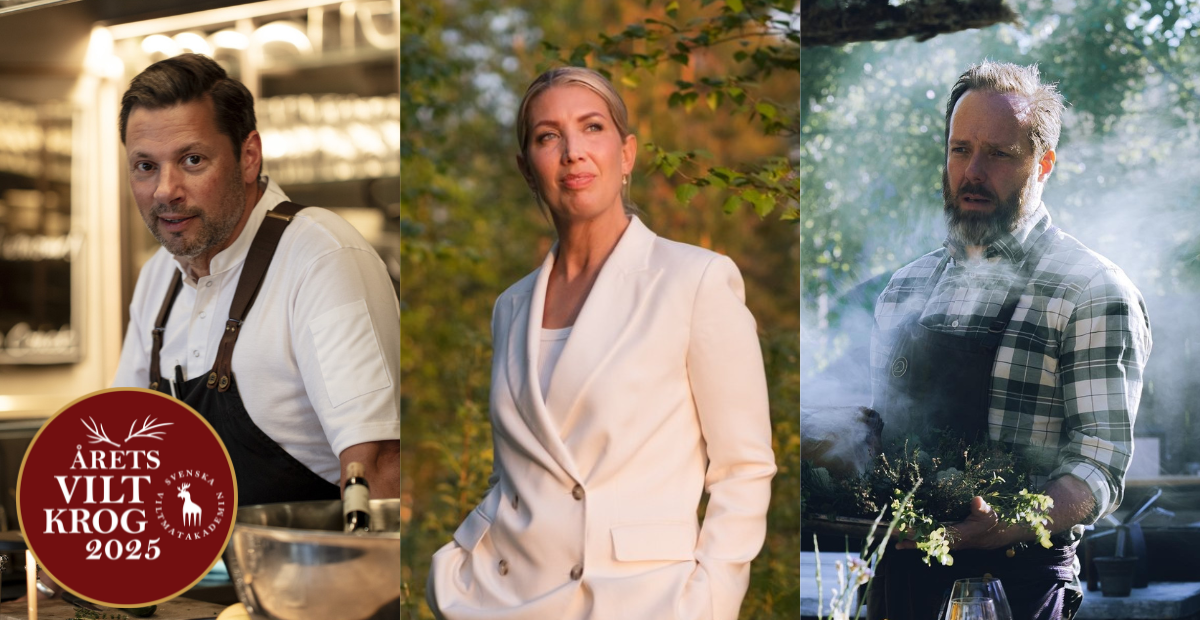
Andreas Landén, who runs Restaurant Jord in Linköping and has won the title Restaurant of the Year for Game Cuisine three times, recognizes the driving force.
– We have always had our vision of working with game from forest to table, says Andreas.
Ulrika Brydling, CEO of Eldrimner, sees the same thing from another perspective:
– We want to spread interest in game meat—not only moose, deer, and roe deer, but also wild goose and wild boar.
Here lies the challenge. Despite Sweden’s abundant game resources, surprisingly little game meat actually reaches the market. Much of it remains at home—in hunters’ freezers—and never becomes available to those who want to buy game in stores, in restaurants, or directly as consumers.
The Swedish Game Food Academy argues that this is a waste of a unique resource, both gastronomically and socially. When demand increases but supply in practice remains limited, game takes on an exclusive aura—even though the raw material is available nearby.
The Academy estimates that only a small portion of harvested game reaches grocery stores today—around 15 percent—and that regulations and logistics contribute to making it difficult to handle small volumes. Gastronomy is the engine—but accessibility is the key.
– The award Restaurant of the Year for Game Cuisine shows what we can achieve when game is taken seriously in the kitchen, says Ulrika Brydling.
The next step, according to the Academy, is for more of the game to actually leave the freezers and reach retail. Because when more people can buy game, more people cook game. And when more people cook game, it becomes—just as it should be—a natural part of Swedish food culture.